Burning Out Brome: What Three Burn Dates Taught Me in Year One
I have a smooth brome problem. The stand on our farm was seeded sometime in the '70s, never farmed, mostly grazed, and chewed up by bulldozers when we built the pond. It's also the closest thing I have to a remnant, which says something about the rest of the place.
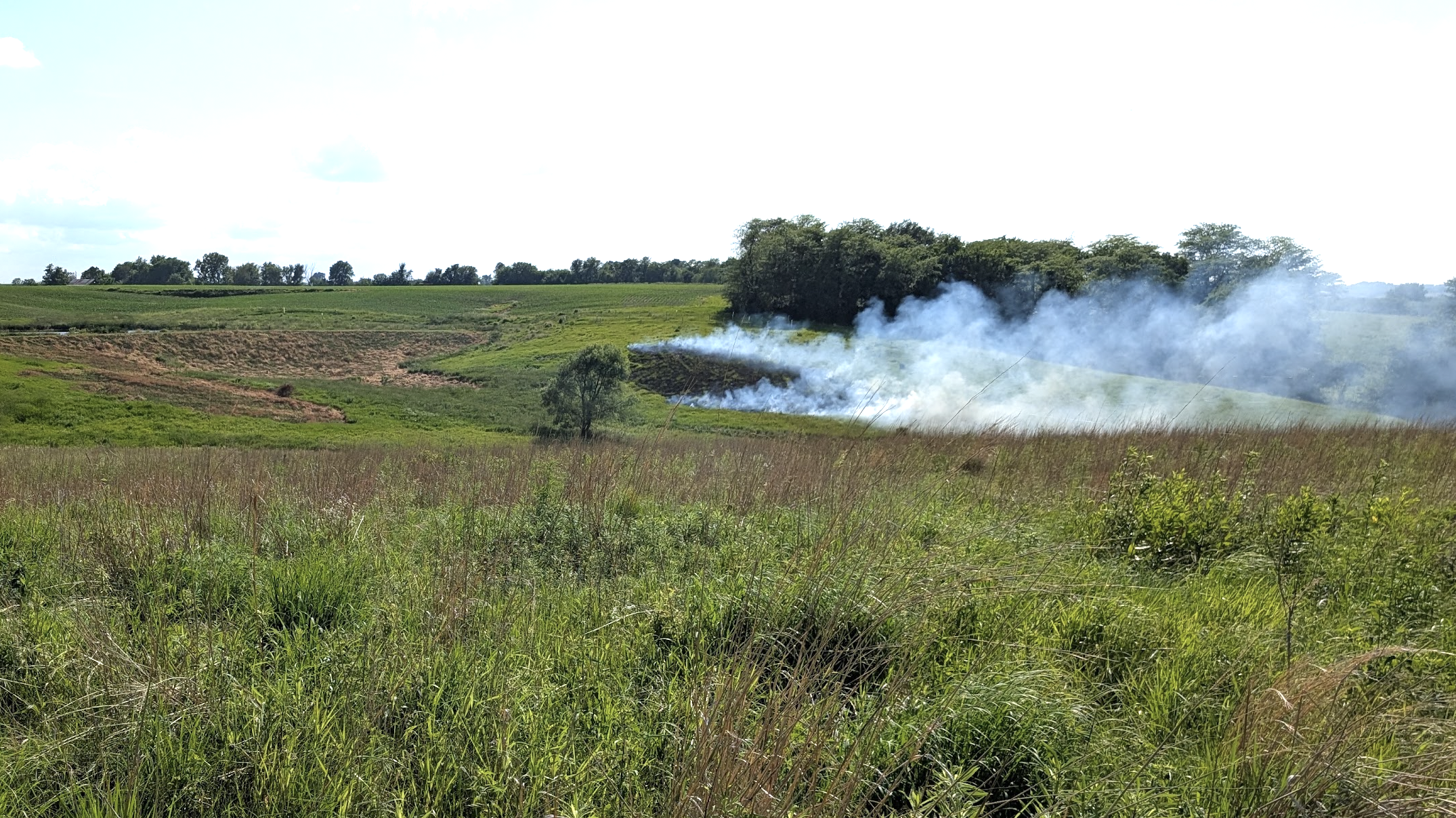
Clethodim or glyphosate would have been the easy answer. I skipped the chemicals by choice, partly to see whether fire alone could make a dent. Thanks to a thunderstorm and some boredom, I ended up comparing three burn dates in southern Iowa: April 9, Memorial Day, and June 14.
April 9
The brome was six or seven inches tall. I burned right before a storm, which put the fire out for me. By September the April section was thick, brown, and had gone to seed. This is the brome that gets a spring haircut and says thank you.
Memorial Day
This was the clear winner. In September the brome was barely boot-high, none of it went to seed, and I could see bare ground. Milkweed, ironweed, and goldenrod moved in, along with American germander, which I'd never seen on the farm before. Multiflora rose was set back, though not finished. Late May hits brome while it's putting everything into growth, and it doesn't handle the interruption well.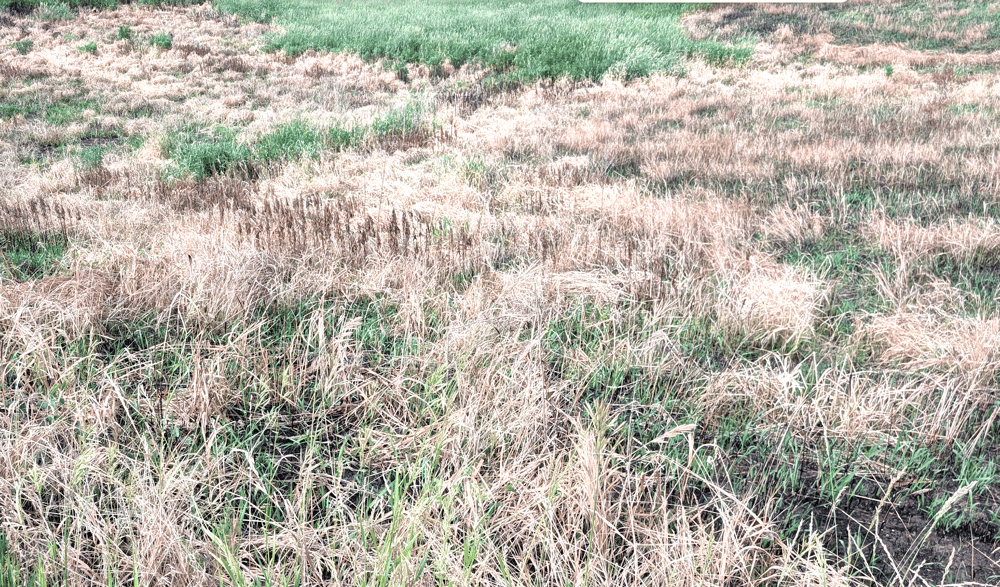
June 14
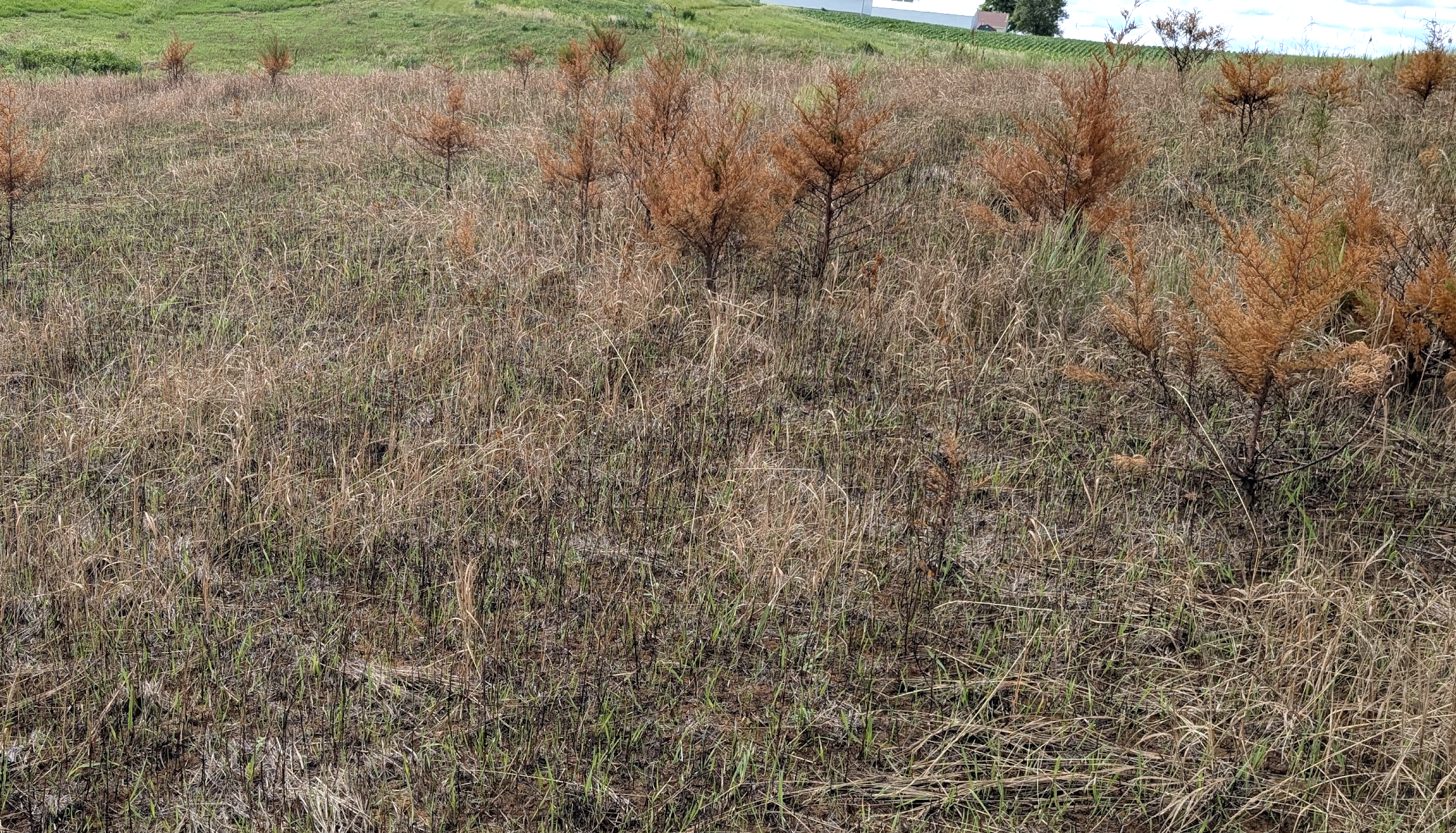
June did real damage. The brome stayed low, and the red cedars on the hillside were toast. The natives took a hit too, though. The ironweed that came back was the smallest I've ever seen. Some young big bluestem did come through. I'd use a June burn once, maybe for cedars, and I wouldn't repeat it year after year.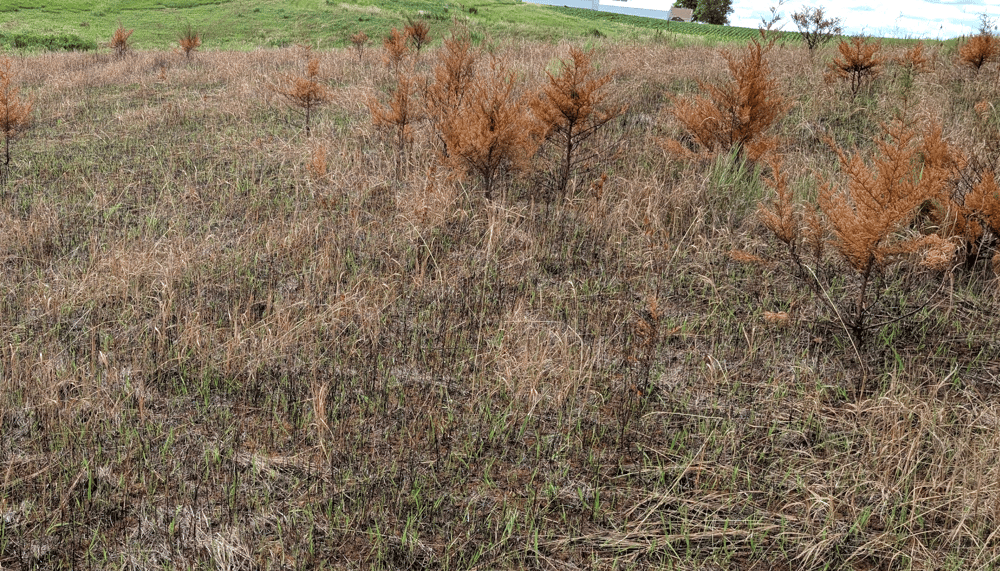
What I Learned
With a heavy brome stand, there's probably no wrong time to burn in year one. Nothing was nesting in it, and it had no pollinator activity to disrupt. Brome came out of Eurasia, and it does not like fire late in its growing season. It does like a March burn, so a March fire just helps the problem along.
The Plan
This winter I'll broadcast a native ecotype mix of 60 to 80 species in November and December. Then I'll put one burn over the whole area in early May, which is late enough to hurt the brome and early enough to spare the forbs.
I'm treating this as a 30- to 35-year project. Fire and overseeding will win eventually. My other goal for 2027 is to finally tell my thistles apart, and I'm less sure about that one.